

Featured Worksheets
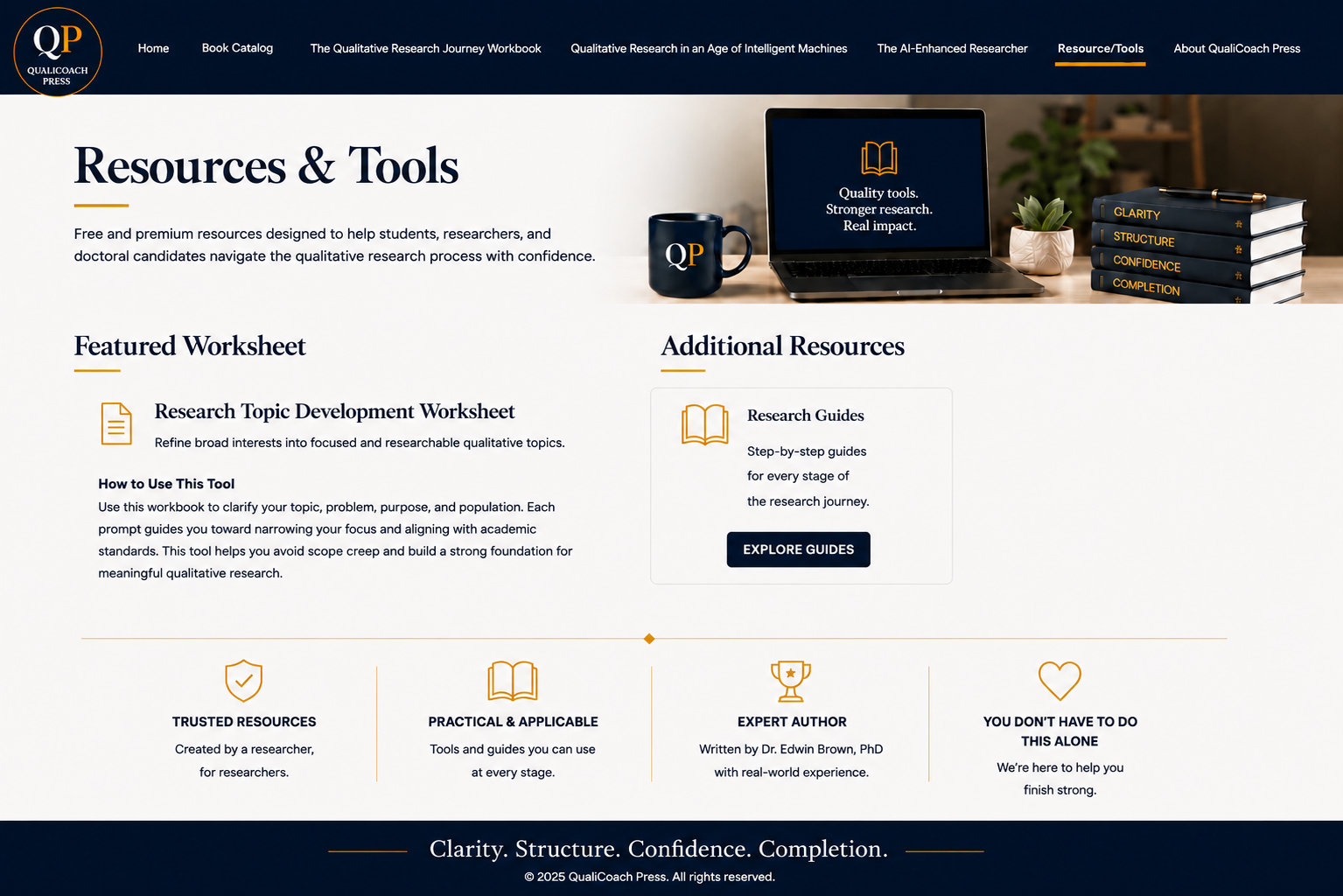
📄 Research Topic Development Worksheet
Refine broad interests into focused and researchable qualitative topics.
How to Use This Tool
Use this workbook to clarify your topic, problem, purpose, and population. Each prompt guides you toward narrowing your focus and aligning with academic standards. This tool helps you avoid scope creep and build a strong foundation for proposals, DRPs, and dissertations.
📄 Research Question Builder
Create clear, aligned qualitative research questions that support your purpose statement.
How to Use This Tool
This worksheet helps you develop clear, aligned qualitative research questions. Follow each step to ensure your RQs match your problem, purpose, and methodology—making them ready for committee review or IRB submission.
📄 Findings and Interpretation Worksheet
Turn qualitative data into compelling findings and practical recommendations.
How to Use This Tool
Use this checklist to ensure your findings are supported, clearly written, and aligned with your research questions. It guides you through presenting themes, using participant quotes, and writing academically sound interpretations.
📄 Coding and Theme Development Worksheet
Learn how to organize codes into categories and develop meaningful themes.
How to Use This Tool
This guide introduces open coding, memo writing, and early theme development. It helps students move from raw transcripts to organized data, building confidence in qualitative analysis.
📄DRP / Proposal Structure Template
Organize Chapters 1–3 and align your methodology for IRB and committee approval.
How to Use This Tool
Use this template to structure Chapters 1–3. It provides clarity on what belongs in each chapter, how to maintain alignment, and how to prepare for committee and IRB expectations.
📄Research Wellness Worksheet — What It Is
Research is demanding—not just intellectually, but emotionally and physically. This worksheet helps you slow down, check in, and stay grounded while continuing to make meaningful academic progress.
It’s not therapy.
It’s not about doing more.
It’s about researching sustainably.